







The ACC Minimum Skills Requirements set out ICF’s assessment criteria for an ACC coaching recording. For each ICF Core Competency, they describe the coaching behaviors assessors look for at the ACC level and those that do not meet the ACC standard.
Many coaches search for this document as the “ACC Markers.” Its official title is ACC Minimum Skills Requirements, and the current version is rev. 1.26.2026.
Key Takeaways
- The ACC Minimum Skills Requirements describe the essential skills needed to demonstrate competency at the ACC level. The document is organized by the ICF Core Competencies.
- Each competency has three parts: Key Skills, Behaviors Consistent With ICF Standards and Behaviors Inconsistent With ICF Standards.
- The ACC document contains 20 behavioral statements across Competencies 3 to 8. The PCC document contains 37 behavioral marker statements across the same six competencies.
- The ACC document includes no behaviors for Competency 2, Embodies a Coaching Mindset. This competency is evaluated in the ICF ACC Exam.
- Portfolio applicants submit one recorded session and transcript. Effective April 1, 2027, ICF removes this performance evaluation from the ACC Portfolio pathway.
What the ACC Minimum Skills Requirements Are
ICF publishes the ACC Minimum Skills Requirements on its Criteria for Assessing ACC Credential page. The document describes the essential skills needed to demonstrate competency at the ACC level. It also identifies non-coaching behaviors that could lead to an unsuccessful ACC Performance Evaluation.
Trained assessors evaluate your coaching skills against the ICF Core Competencies. The ACC behavioral statements give them a consistent way to measure ACC-level skills.
The document is organized around the ICF Core Competencies. Each competency from 3 to 8 has the same three sections:
- Key Skills. The foundational coaching abilities for each competency, applicable across all credential levels.
- Behaviors Consistent With ICF Standards. The observable actions that reflect effective coaching practice at the ACC level.
- Behaviors Inconsistent With ICF Standards. Actions that may disrupt the coaching process or reduce the quality of the coaching experience, and that do not meet the standard for the ACC level.
Since January 1, 2026, ACC candidates have been evaluated using the updated Minimum Skills Requirements. The change was announced on October 9, 2025.
What ICF Assesses in Each Core Competency
Demonstrates Ethical Practice (Competency 1)
Competency 1, Demonstrates Ethical Practice, applies at every credential level. Every ICF credential requires a working knowledge of the ICF Code of Ethics and how to apply it. It has three consistent behaviors, including a strong understanding of and alignment with the ICF Code of Ethics:
- The coach shows a strong understanding of the ICF Code of Ethics and acts in line with it.
- The coach stays in the coaching role, structures the conversation as coaching and keeps the focus on present and future issues.
- The coach uses trust, presence, active listening and evoking awareness so the client reaches their own insights.
Inconsistent behaviors include a clear violation of the ICF Code of Ethics, and mainly giving advice or telling the client what to do throughout the session. A recording also falls short when the coach’s focus is mainly on telling the client what to do or how to do it (consulting mode), or when the conversation is mainly about the client’s past, especially the emotional past (therapeutic mode).
Embodies a Coaching Mindset (Competency 2)
Competency 2, Embodies a Coaching Mindset, has no ACC behaviors listed. ICF describes a coaching mindset as open, curious, flexible and client-centered, built through ongoing learning and development across a coach’s career. A single recorded session cannot fully capture that. Your understanding of this competency is evaluated in the ICF ACC Exam.
For Competencies 3 to 8, the following behaviors are consistent with coaching at the ACC level.
Establishes and Maintains Agreements (Competency 3)
- The coach explores the client’s topic together with the client.
- The coach and client agree on the outcome the client wants to accomplish in the session.
- The coach explores why the coaching outcome matters to the client.
- The coach keeps to the agreed agenda throughout the session.
Where recordings fall short: The coach picks the topic, or no topic is agreed at all. The coach never confirms out loud what the client wants from the session, coaches around a different topic, or lets the conversation drift from the agenda without checking with the client.
Example. Meets the marker: “What would you like to have by the end of our session today?” Falls short: “Let’s work on your time management today.”
Cultivates Trust and Safety (Competency 4)
- The coach acknowledges the client’s work in the session.
- The coach shows respect, support or concern for the client.
- The coach supports the client in expressing feelings, perceptions, concerns or beliefs.
Where recordings fall short: The coach shows more interest in their own view than in the client’s, does not ask about the client’s thinking or feelings or ignores them when shared, or comes across as dismissive or judgmental. Missing chances to acknowledge the client’s work also counts against you.
Example. Meets the marker: “You have been very honest about what is holding you back.” Falls short: “That is not really a big problem.”
Maintains Presence (Competency 5)
- The coach is observant and responsive to the client.
- The coach shows curiosity about the client, the client’s agenda, or both.
- The coach gives the client room to lead during the session.
- The coach stays silent to give the client time to reflect.
Where recordings fall short: The coach keeps missing the client’s verbal and non-verbal cues, interrupts or fills silences, focuses on showing their own knowledge, or leads the conversation instead of partnering with the client on what to explore next.
Example. Meets the marker: “What would be most useful to explore next?” Falls short: Answering for the client during a pause: “So you probably mean that…”
Listens Actively (Competency 6)
- The coach listens by recognizing the client’s feelings, perceptions, challenges or beliefs.
- The coach asks about, explores or includes the client’s use of language.
- The coach summarizes or paraphrases what the client says to confirm the coach’s understanding.
Where recordings fall short: The coach’s responses do not connect to what the client said or wants to achieve, the coach seems to be listening for a chance to give advice, summaries run long or complicated, or the coach does not ask the client whether a summary is accurate.
Example. Meets the marker: “You called it ‘a heavy week.’ Did I get that right?” Falls short: A long summary that adds the coach’s own interpretation and moves on without checking.
Evokes Awareness (Competency 7)
- The coach supports the client in viewing the situation from different perspectives.
- The coach asks about the client’s feelings, perceptions, behaviors or beliefs.
- The coach asks clear, open ended questions, one at a time.
Where recordings fall short: Most questions are leading, closed or carry a built-in answer, they follow the coach’s agenda instead of the client’s, the coach stacks questions without leaving time to answer, or every question is about reaching the outcome without exploring the client’s feelings, perceptions, behaviors or beliefs.
Example. Meets the marker: “How do you feel about this situation?” Falls short: “Don’t you think you should talk to your manager?”
Facilitates Client Growth (Competency 8)
- The coach asks what the client has learned during the session.
- The coach supports the client to use that learning to plan next steps.
- The coach supports the client to close the session.
Where recordings fall short: The coach does not invite the client to review progress or apply what they learned, the next steps stay vague, the coach assigns actions instead of letting the client design them, or the coach decides when and how the session ends.
Example. Meets the marker: “What will you take from today?” Falls short: “Your homework is to update your CV by Friday.”
How the ACC Requirements Differ From the PCC Markers
ICF now publishes the ICF PCC Markers as the PCC Minimum Skills Requirements, using the same format as the ACC document. The PCC document uses the term “behavioral marker statements.” The ACC document uses “behavioral statements.”
| Core Competency | ACC behaviors | PCC behaviors |
|---|---|---|
| 3. Establishes and Maintains Agreements | 4 | 4 |
| 4. Cultivates Trust and Safety | 3 | 4 |
| 5. Maintains Presence | 4 | 5 |
| 6. Listens Actively | 3 | 7 |
| 7. Evokes Awareness | 3 | 8 |
| 8. Facilitates Client Growth | 3 | 9 |
| Total | 20 | 37 |
Competency 3 illustrates the difference in depth. At ACC, the coach and client agree on what the client wants to accomplish as the session outcome. At PCC, the coach also partners with the client to define or reconfirm measures of success and identify what the client believes they need to address in the session.
Competency 2 is treated differently as well. The ACC document assigns this competency to the ICF ACC Exam. The PCC document assigns it primarily to the exam and lists 11 PCC Markers from other competencies that reflect it in a recording.
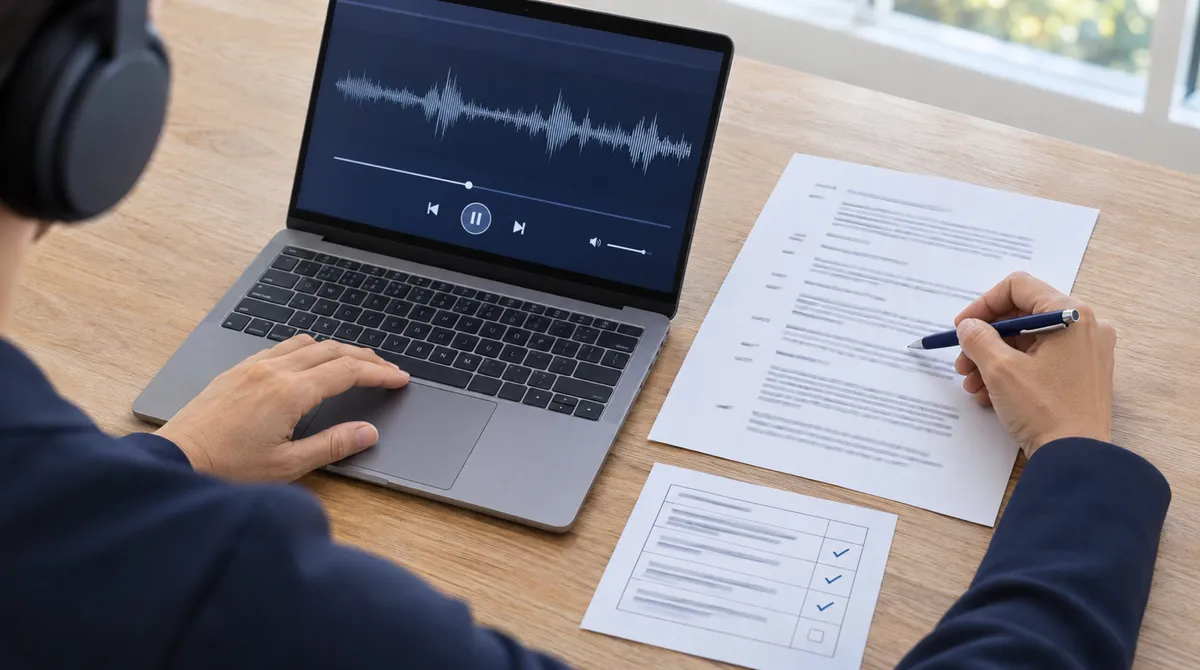
The recording requirement also differs. ACC Portfolio applicants submit one recorded coaching session and transcript. PCC Portfolio applicants submit two.
When the ACC Minimum Skills Requirements Apply
The ACC Minimum Skills Requirements apply to the performance evaluation, which is one of the five ICF ACC credential requirements. The evaluation process depends on your education pathway:
- Level 1 or Level 2 pathway. The performance evaluation is included in your ICF-accredited education. You submit nothing extra with your ACC application.
- Portfolio pathway. You submit one recorded coaching session and its transcript with your ACC application.
ICF accepts recordings in English, French, German, Hungarian, Italian, Polish, Spanish or Swedish. Your transcript must use the same language as the recording.
The Portfolio pathway changes in 2027. Effective April 1, 2027, the performance evaluation is no longer required for ACC and PCC Portfolio credentials. A mentor coach who holds ICF’s Mentor Coach Specialization then observes and reviews at least three of your coaching sessions and completes a Competency Review Form for your application. The Level 1 and Level 2 pathways do not change. The ICF mentor coaching requirements explain the mentor coaching rules in full.
The ACC Minimum Skills Requirements and the ACC Exam
The recording assesses your coaching. The ICF ACC Exam tests your knowledge of the ICF Core Competencies and the Code of Ethics.
If you are planning to take the ICF ACC Exam soon, our ICF ACC Mastery Exam Prep & Practice course includes self-paced modules covering every ICF Core Competency and the Code of Ethics. It also includes 176 smart flashcards and 240 questions across four exam simulations.
FAQs About the ACC Minimum Skills Requirements
What are the ICF ACC Minimum Skills Requirements?
The ICF ACC Minimum Skills Requirements are the criteria ICF uses to assess an ACC performance evaluation. Organized by the ICF Core Competencies, they describe the essential skills needed to demonstrate competency at the ACC level. Each competency includes Key Skills, Behaviors Consistent With ICF Standards and Behaviors Inconsistent With ICF Standards.
What are the ICF ACC Markers?
Many coaches call the ACC Minimum Skills Requirements the ICF ACC Markers. The document lists 20 behavioral statements across Competencies 3 to 8 that describe coaching at the ACC level.
How are the ACC Minimum Skills Requirements different from the PCC Markers?
The ACC Minimum Skills Requirements differ from the PCC Markers in the number and depth of the behaviors assessed. The ACC document lists 20 behavioral statements across Competencies 3 to 8. The PCC document lists 37 behavioral marker statements across the same six competencies. Both documents use the same structure and nearly identical Key Skills.
Do I need to submit a coaching recording for the ACC credential?
A coaching recording for the ACC credential is needed only on the Portfolio pathway. You submit one recorded coaching session and its transcript with your application. On the Level 1 or Level 2 pathway, the performance evaluation is part of your ICF-accredited education. Effective April 1, 2027, ICF removes the performance evaluation from the ACC Portfolio pathway.
Where can I download the ACC Minimum Skills Requirements PDF?
You can download the ACC Minimum Skills Requirements PDF from ICF’s Criteria for Assessing ACC Credential page on coachingfederation.org. The current version is rev. 1.26.2026.
Sources
- ICF, ACC Minimum Skills Requirements (rev. 1.26.2026)
- ICF, Criteria for Assessing ACC Credential
- ICF, PCC Minimum Skills Requirements (rev. 1.26.2026)
- ICF, Criteria for Assessing PCC Credential
- ICF, Supporting Coaches With Greater Clarity: New Minimum Skills Requirements (October 9, 2025)
- ICF, ACC and PCC Performance Evaluation to Be Replaced by Enhanced Mentor Coaching Requirement

About the author
ExpertCoach.Co Team
This guide was written and reviewed by ICF-credentialed coaches on the ExpertCoach.Co team. ExpertCoach.Co helps thousands of coaches from more than 60 countries prepare for their ACC, PCC, and MCC credentials with clarity and confidence.